Tips on How to Increase Fibre, Even if it Makes You Feel Bloated…
I talk a lot about fibre, and for good reason. We hear so much online about its benefits, and the research backs up just how important it is for our health.
Fibre helps protect against constipation, supports the diversity of our gut bacteria, helps regulate blood sugar and can improve cholesterol levels. It can also help us feel fuller for longer, support our body's natural GLP-1 response (if you're all about that jazz!) and, as a result of all these things, contribute to longevity and a healthier lifespan.
So, what's not to love?
Well, I get it. It's not always quite that simple.
Because what happens when you're trying to do all the right things, loading up on fibre-rich foods, only to find yourself feeling more bloated, uncomfortable and wondering whether it's all worth it?
Hmmmm. Sound familiar?
The good news is that bloating doesn't necessarily mean fibre isn't for you. Often, it's about the type of fibre you're eating, how quickly you're increasing your intake and how well your digestive system tolerates it.
So, let's run through some practical tactics to help you increase your fibre intake without feeling like a balloon by the end of the day.
1. Get to Know Your Triggers
Not all fibre is created equal when it comes to how our guts respond.
Some fibres ferment more quickly in the gut, producing gas as our gut bacteria break them down. This is a completely normal process, but for some people, particularly those with irritable bowel syndrome (IBS), it can contribute to uncomfortable bloating, wind and abdominal pain.
This is where FODMAPs come into the conversation.
FODMAPs are certain types of fermentable carbohydrates found in foods such as onions, garlic, beans, lentils and some fruits. They're not inherently bad for you, and many foods containing them are incredibly nutritious. However, they can trigger symptoms in people with sensitive guts.
If you suspect certain foods are contributing to your symptoms, try keeping a simple food and symptom diary. Look for patterns rather than immediately cutting out lots of different foods.
For some people, temporarily reducing certain high-FODMAP foods can help. A structured low-FODMAP approach may be useful for IBS, ideally with guidance from a registered dietitian, followed by gradually reintroducing foods to identify individual triggers.
The aim isn't to avoid these foods forever. It's to understand what you tolerate, manage symptoms and, where possible, gradually broaden your diet again.
In the meantime, there are other things you can do to support your digestion.
2. Slow Down and Chew Your Food Properly
It sounds ridiculously simple, doesn't it? But how often do you actually slow down and chew your food properly?
When we're rushing meals, eating on the go or barely putting our forks down between mouthfuls, it's easy to eat quickly, swallow more air and not carry out the first step of digestion effectively.
Chewing breaks food down into smaller pieces and mixes it with saliva, helping prepare it for digestion. Eating more slowly can also give you time to recognise when you're comfortably full.
Try putting your cutlery down between mouthfuls, chewing thoroughly and giving your meals a little more time.
You don't need to turn every meal into a mindfulness ritual. Just slow things down a bit and see whether you notice a difference.
3. Be Mindful of What You Drink Around Meals
Staying hydrated is particularly important when you're increasing fibre, as fluids help fibre do its job and support regular bowel movements.
What may help is being mindful of how you drink.
Large drinks alongside meals will not only leave you feeling overly full, but they’ll also risk diluting your stomach acid which funnily enough, is mean to remain as a strong acid. Leaving 20 minutes either side of a meal is all that’s required.
4. Consider Your Digestive Support
Let's talk digestive bitters.
These are herbal preparations traditionally used to stimulate digestive secretions, and they're something you may have come across in the world of natural health.
Weak digestive could play a part in your symptoms so I always say these are lovely to try, to see if you as an individual notice any improvements.
5. Stick to Whole Foods Where You Can
I've had my protein bar rants over the past few weeks, but let's revisit the point.
You might notice that certain 'fibre-rich' foods or supplements leave you feeling worse, particularly highly processed products containing added fibres, sweeteners and other ingredients.
Some products contain added fibres such as inulin or chicory root fibre, which can ferment readily and trigger gas and bloating in sensitive people. Certain sweeteners, particularly sugar alcohols, can also contribute to symptoms.
That doesn't mean all protein bars or fortified foods are bad. It simply means that the source of the fibre matters, and more isn't always better for your gut.
Where possible, build your fibre intake around a variety of whole foods: vegetables, fruit, oats, wholegrains, beans, lentils, nuts and seeds.
If a particular bar, powder or supplement consistently leaves you bloated, check the ingredients and try changing one thing at a time.
You may find that you tolerate fibre from ordinary foods much better than certain concentrated or added sources.
7. Soak Your Fibre-Rich Foods Rather Than Cutting Them Out
Before you banish beans, lentils, nuts and seeds from your kitchen, try changing how you prepare them.
Soaking dried beans and lentils, rinsing canned pulses thoroughly and cooking them until soft may help some people tolerate them better. Soaking and cooking can reduce some of the compounds responsible for digestive symptoms, although the effect varies by food and preparation method.
You can also soak chia seeds before eating them, allowing them to absorb liquid and form a gel.
Psyllium husk is another option if you're struggling to get enough fibre, particularly if constipation is an issue. Start with a small amount, increase gradually and take it with plenty of water, following the product instructions.
Just remember that soaking doesn't remove every fermentable carbohydrate, so you may still need to pay attention to portion sizes and your own tolerance.
The goal is to make fibre-rich foods easier to manage, not automatically remove them from your diet.
And don't forget your hydration. Increasing fibre without drinking enough fluids can make constipation worse, which may leave you feeling even more bloated.
8. Try Cooked Foods Over Raw
Here's another simple tactic: experiment with cooked rather than raw fruits and vegetables.
Cooking softens plant cell walls and changes the texture of foods, which can make them easier to chew and more comfortable to eat for some people.
Think roasted carrots instead of a raw carrot salad, wilted spinach instead of a huge bowl of raw leaves, or a warming vegetable soup instead of a plate piled high with crunchy vegetables.
You can also experiment with warm meals rather than cold ones if that's what feels best for you. There's no universal rule that warm food is better for digestion, but comfort and individual tolerance matter.
And if you're finding that large, cold salads leave you feeling uncomfortable, don't assume you need to give up vegetables. Try smaller portions, cook them until tender and gradually build up from there.
You may find you're able to tolerate a wider variety of foods this way.
9. Increase Fibre Gradually
This one deserves its own section because it's so easy to overlook.
If you've suddenly gone from eating very little fibre to adding oats, chia seeds, beans, lentils, wholegrains and a fibre supplement all in the same week, your gut may need time to adapt.
Your gut bacteria ferment certain fibres, and increasing the amount available to them can temporarily increase gas production.
Rather than making lots of changes at once, increase your intake gradually over days or weeks, depending on how you feel.
You might start by adding a portion of oats at breakfast, then introduce a small serving of lentils a few days later. Once that feels comfortable, build from there.
There's no need to rush towards the recommended 30 grams a day if doing so leaves you miserable. Work towards it progressively, while keeping an eye on your symptoms and making sure you're drinking enough.
10. Add Variety and Get a Little Creative
Finally, have a bit of fun with it.
Increasing fibre doesn't have to mean forcing down enormous salads or eating bowls of beans when you don't even like beans.
Try a new wholegrain, add lentils to a soup, mix berries into your breakfast, sprinkle seeds over a meal or experiment with a homemade recipe rather than relying on packaged alternatives.
Different plant foods provide different types of fibre, alongside a range of vitamins, minerals and plant compounds. Variety is a useful long-term goal, although you don't need to eat every type of plant food or hit a particular diversity target every single day.
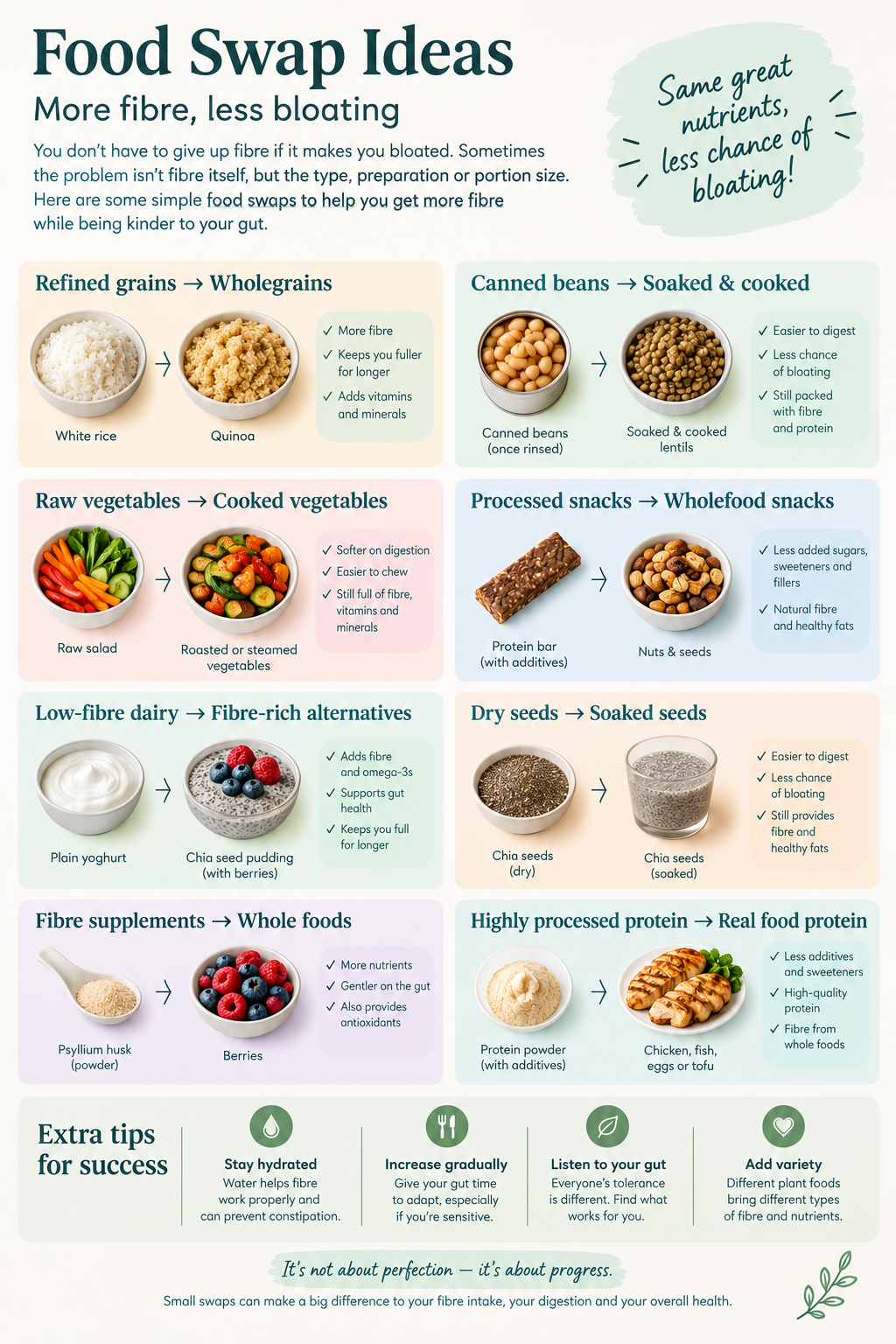
Small, consistent changes often work better than an ambitious overhaul that leaves you uncomfortable and ready to give up. And if you're keen to try out some simple, fibre food swaps, check out my guide below:
One final point: persistent or severe bloating shouldn't simply be put down to fibre. If your symptoms are ongoing, worsening or accompanied by unexplained weight loss, blood in your stools, vomiting or significant abdominal pain, seek medical advice.
And now I'm curious: have you found that certain fibre-rich foods leave you more bloated than others? Are you struggling more with beans and lentils, raw vegetables, protein bars or fibre supplements?
Let me know. I'd love to hear what's working for you and what you'd like me to cover next.
 Looking for a healthier alternative to regular salt? Well, look no further!