What Are Ultra-Processed Foods? Advice from a UK Nutritionist
You've probably heard people talking about ultra-processed foods (UPFs). But what do we really need to know, breaking it down, some home truths about what we actually need to understand before we can make an informed decision about what we pick up in the supermarket, because let’s be honest, at this time of year it can pretty challenging to scope out the real food.
So, what are they?
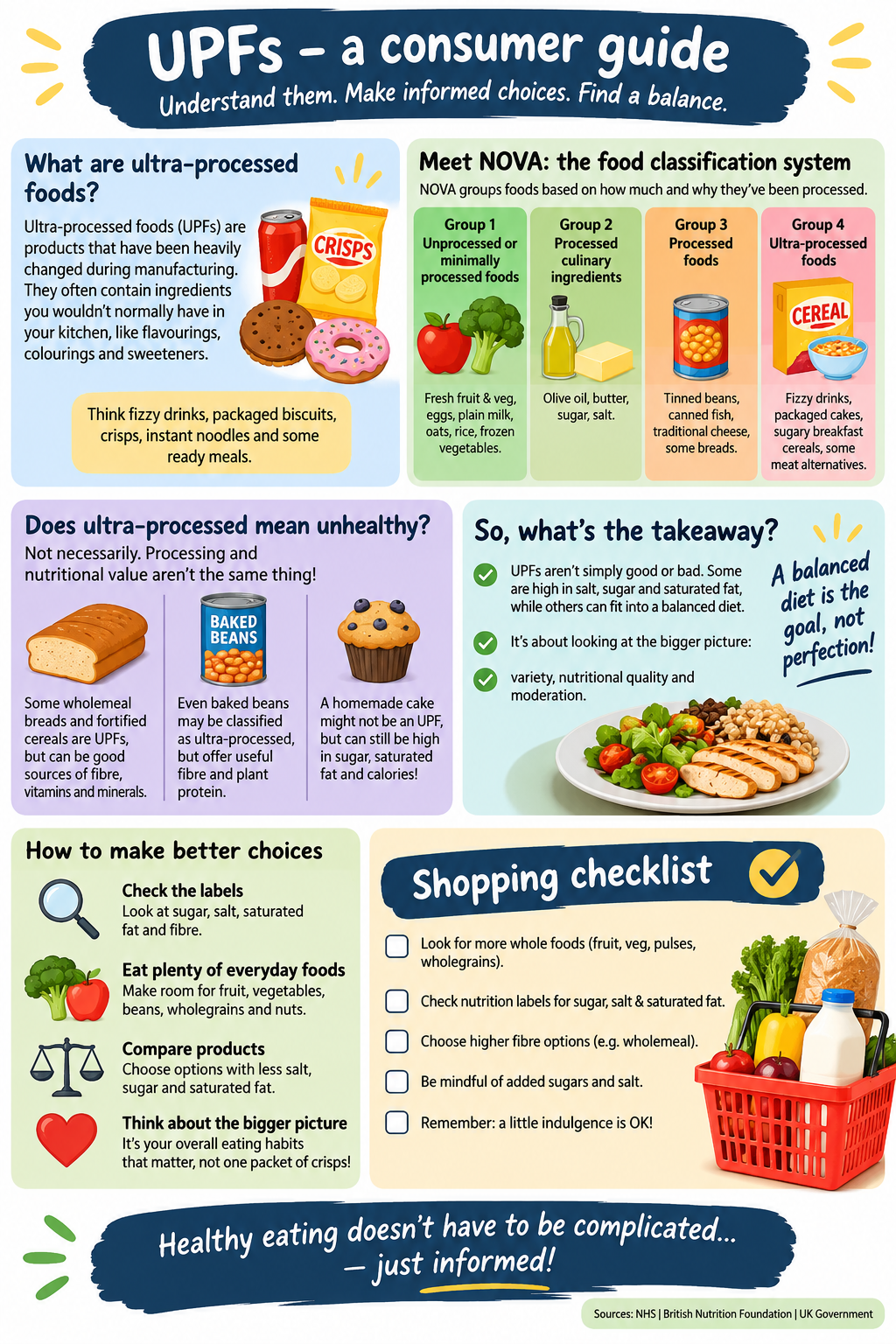
Put simply, ultra-processed foods are products that have been heavily changed during manufacturing. They're often made using ingredients you wouldn't normally have in your kitchen, such as certain emulsifiers, flavourings, colourings and sweeteners.
On the whole, think fizzy drinks, packaged biscuits, crisps, instant noodles, some ready meals and certain breakfast cereals.
But here's where it gets interesting: not all processed foods are ultra-processed, and not everything that's processed is automatically unhealthy.
To understand the difference, it's worth getting familiar with something called the NOVA classification system.
What is NOVA?
NOVA is a way of grouping foods according to how much and why they've been processed. It divides foods into four groups.
Group 1: Unprocessed or minimally processed foods
These are foods in their natural state, or foods that have had very little done to them. I refer to them as wholefoods a lot in my videos. Think fresh fruit and vegetables, dairy, wholegrains, but products like oats, rice or frozen vegetables which often come in packets, also count, since the food is still in its very natural state. Washing, freezing or pasteurising doesn't suddenly make these foods unhealthy.
Group 2: Processed culinary ingredients
These are ingredients we use to prepare meals, such as olive oil, butter, sugar and salt. They're usually extracted from foods or obtained from nature. You might worry about a few mentions there,
Group 3: Processed foods
These are made by adding ingredients such as salt, sugar or oil to everyday foods. Tinned beans, canned fish, breads and some freshly baked breads are examples. So the food still resembles some sort of original state, but actually, some of these additive can be pretty unhealthy in some cases, like vegetable oils which is one of my big bug bears.
Group 4: Ultra-processed foods (UPFs)
This is the group that gets the most attention. These are industrially formulated products that often contain several ingredients and additives. Examples include fizzy drinks, packaged cakes or other bakes goods, sugary breakfast cereals, frozen foods, ready meals, certain meat alternatives (vegan doesn’t mean healthy). Quite far removed from it’s original state.
Does ultra-processed automatically mean unhealthy?
Not necessarily. But usually. Sometimes there’s backing for UPF that are fortified, but what are they being fortified with? Still synthetic additives, even if they are being hailed as vitamins, for example.
Some options like baked beans, is a nice example to show how individual this can be, like most points in healthcare. Ultimatley a tin of baked beans are normally providing wholefood, plant-based fibre. But then the quality of a tin of baked beans can vary greatly depending on which additives and extra are put in. You get some really nice brands with gorgeous natural flavours, some with some cinnamon, a little salt, the others with E numbers galore.
On the flip side, a homemade cake might not be ultra-processed, but that doesn't mean the combination of sugar, butter and flour should be an integral part of someones diet, it’s not got the greatest spectrum of nutrients, but I’d still 100% choose a homemade cake over a shop bought variety, as the additives will be very low.
So, rather than judging a food by its processing category alone, it's important to look and have a think about what it actually contains.
So, some summary tips from me around this:
- Check the labels: how many ingredients, how many you don’t reocognise, basically chemicals. And comparing products can be an eye opener.
- Eat plenty of everyday wholefoods: Go back to basics. fruit, vegetables, beans, wholegrains and nuts, herbs, spices. Up the anti-inflammatory influence.
- Think about the bigger picture: It's your overall eating habits and lifestyle that matter. Stress and balance elsewhere also adds to the picture. Not everything in a packet is bad, but knowledge is power.
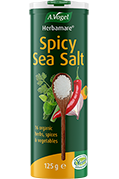 Looking for a healthier alternative to regular salt? Well, look no further!